I’ve been photographing weddings long enough to remember when digital photography wasn’t considered proper photography. But actually, I can go back further than that. I remember when 35mm film wasn’t always considered proper professional photography either.
And that’s partly why I find some of the conversations surrounding artificial intelligence today rather fascinating. Because I can’t help thinking we’ve been here before.
When was photography last considered authentic?
When I started photographing weddings, medium format was generally regarded as the professional standard. If you were serious about wedding photography, cameras such as Hasselblad, Bronica and Mamiya were familiar tools of the trade. I couldn’t afford a Hasselblad, so I bought a Bronica and also used a Mamiya.
If you turned up photographing weddings exclusively on 35mm, there were certainly photographers who would look down their noses at you. The negatives were smaller, there was more visible grain, and medium format generally offered better image quality, particularly when producing larger prints.
Now here’s what I find interesting. Today, 35mm film photography has become fashionable again, and that grain, which was once considered a disadvantage, is now something people actively seek out. It’s described as beautiful, nostalgic, organic and, perhaps most interestingly, authentic.
I’ve nothing against that. I spent years photographing on film and completely understand its appeal. But I do find the change in attitude rather amusing. Because if 35mm is now somehow the authentic standard, what happened to medium format?
And what about the photographers before us, working with large-format cameras, glass plates and later sheet film? Would some of them have looked at our smaller cameras and wondered what on earth we were doing?
Photography has never had one permanent standard. Different formats have always had their advantages and disadvantages, yet we have a peculiar habit of treating whatever we’re accustomed to as the correct way of doing things. Until something else comes along.
I actually lost a wedding booking because I used digital
I moved into digital photography around 2000, when I bought my first digital camera, the Fuji FinePix S1 Pro. This was still very much the early days of professional digital photography, particularly in the wedding industry.
A few years later, around 2003 or 2004, film was still the familiar and established way of photographing weddings. Digital was the new kid on the block, and there was considerable resistance to it. Digital wasn’t real photography, apparently. Film was tried and tested, whereas digital was something of an unknown.
It was during that period that I remember losing a potential wedding booking because I’d made the move to digital.
A gentleman contacted me after looking through the photographs on my website. He liked my work and wanted to discuss photographing his wedding. Everything seemed perfectly straightforward until he asked whether I could guarantee that I would photograph the wedding using film.
I explained that I photographed weddings digitally. In fact, every photograph he’d admired on my website had been taken with a digital camera. So I asked him what it was about those photographs that would have been better if I’d taken them on film. What would he actually lose by having his wedding photographed digitally?
He couldn’t really give me an answer. He simply felt more comfortable with film.
And I think that’s an important distinction, particularly looking back at it now. This wasn’t today’s renewed interest in film. It wasn’t about nostalgia, grain or wanting the particular aesthetic of 35mm. This was happening at a time when digital itself was unfamiliar.
Film was what people knew. It had photographed generations of weddings, whereas digital was relatively new. Entrusting something as important and unrepeatable as your wedding photographs to an unfamiliar technology understandably made some people nervous.
I respected his preference, of course. But he’d already seen the results of digital photography and liked the photographs. It was only when the technology behind those photographs became part of the conversation that uncertainty appeared.
That experience has stayed with me, particularly when I hear some of today’s conversations about AI.
Even our definition of “enough” keeps changing
There’s another example of this constantly shifting mindset, and that’s megapixels.
My first digital camera was that Fuji FinePix S1 Pro. It had a 3.1-megapixel Super CCD sensor but could produce output files of approximately 6.1 megapixels through interpolation. At the time, that sounded extraordinary, and resolution was one of the biggest talking points surrounding digital photography.
But as I started to understand digital photography better, something else became more important to me than the headline number of megapixels.
The FinePix S1 Pro didn’t shoot RAW files. It offered JPEG and TIFF, whereas the Nikon D1X, which I moved to afterwards, allowed me to shoot RAW. Interestingly, the D1X had 5.3 effective megapixels, so although the Fuji advertised a larger interpolated output file, I wasn’t moving to the Nikon because it had a bigger number on the specification sheet.
I’d begun to understand the importance of retaining as much of the original image information as possible. RAW gave me considerably more flexibility when processing my photographs, particularly when adjusting exposure, colour and tonal detail. Ultimately, that mattered because I wanted to produce the best finished photographs I could for my customers. It’s the same reason I still photograph in RAW today.
Later I bought the Nikon D2X, which offered 12.4 megapixels, and I remember being genuinely impressed by the increase in detail. But throughout all those developments, photographers kept discussing how many megapixels were actually necessary. There always seemed to be a point beyond which additional resolution was supposedly unnecessary.
Today, I regularly hear photographers describing somewhere around 24 megapixels as the sweet spot. Anything more is overkill, apparently. Unless you’re producing enormous prints, why would you possibly need 40, 50 or 60 megapixels?
And perhaps they’re right for their particular requirements. I’m certainly not suggesting everybody needs a high-resolution camera. What interests me is the certainty with which these lines sometimes get drawn, because we’ve heard it all before.
What seemed excessive twenty years ago would be considered rather modest today, and who’s to say what we’ll regard as normal twenty years from now? There’s nothing wrong with having a preference, but the problem comes when we turn our personal preference into a universal rule.
For me, the question has always been rather simpler: does this particular technology help me produce better work for the people I’m photographing?
That was ultimately why I moved from the Fuji to the Nikon. And it’s much the same question I’m asking myself about AI today.
And now AI is the latest villain
I’ve recently been using AI to help me develop software specifically for my photography business. I’m not a software developer, but I do understand the problems I want to solve.
In the past, if I wanted a particular piece of software, I’d either have to buy something off the shelf and adapt the way I worked to suit it, or pay a developer to build something specifically for me. And paying somebody to develop bespoke software isn’t always financially realistic, particularly for a small business.
AI has changed that. It’s allowing me to develop software around the way I actually work, rather than changing the way I work to accommodate somebody else’s software. I can identify a problem in my business and start creating something tailored specifically to solve it, rather than simply accepting whatever features somebody else decided to include in an off-the-shelf product.
For me, that’s incredibly useful. And again, I’m not using AI simply because it’s the latest technology. I’m using it because it allows me to solve real problems in my business in a way that previously would have been expensive or beyond my technical abilities.
I’m also comfortable using AI-assisted software for parts of my photography workflow, including editing and culling. And I know some photographers strongly disagree with that approach.
Recently, I heard a photographer arguing that artificial intelligence couldn’t possibly recognise the subtle artistic decisions a human photographer makes. What if a photograph was deliberately blurred? What if the focus wasn’t technically perfect, or the photograph was intentionally unconventional? Wouldn’t AI simply reject it?
And here’s the interesting thing. I agree with his underlying concern.
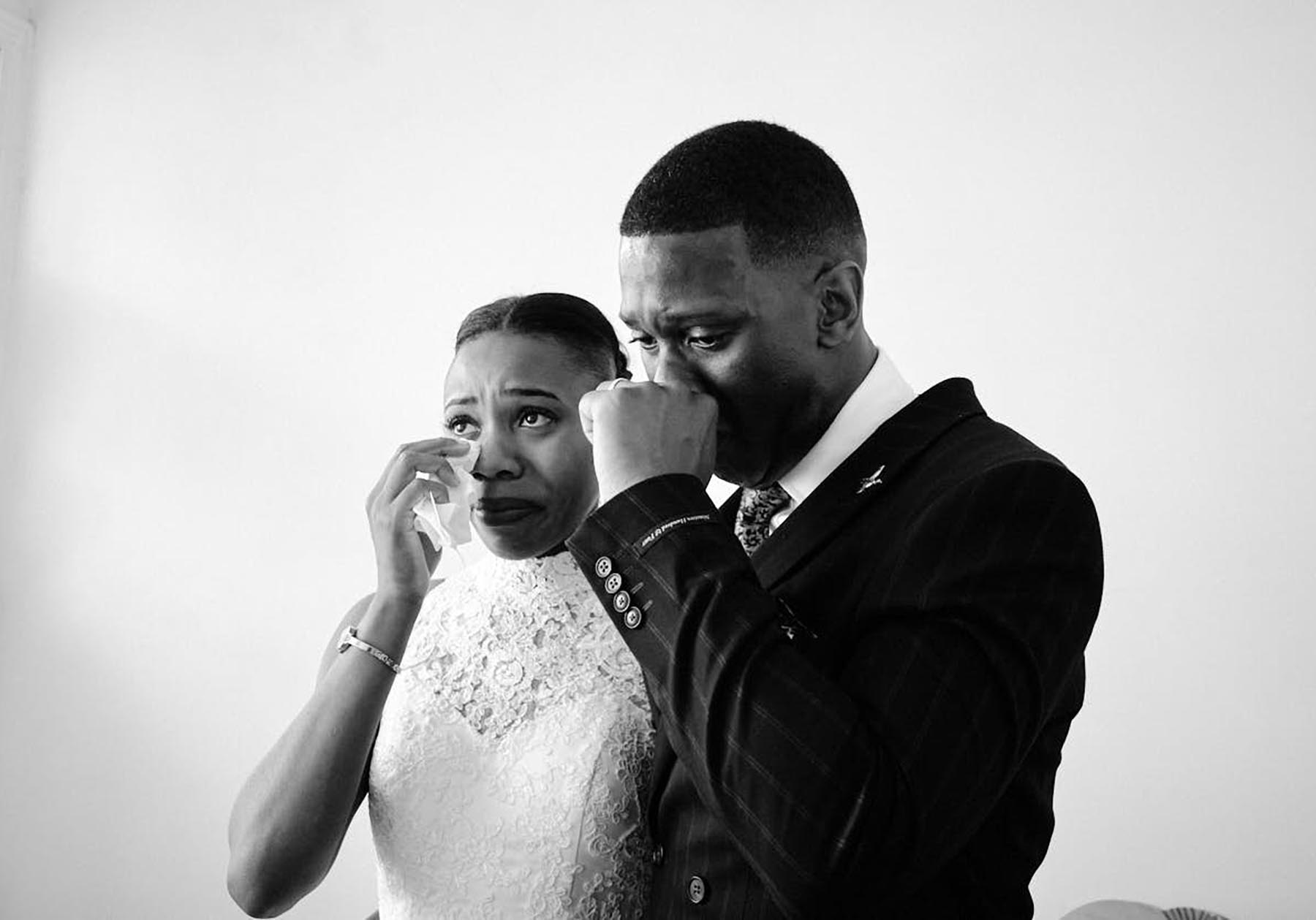
Some of my favourite photographs aren’t technically perfect. A fleeting expression, a burst of laughter, somebody wiping away a tear, or movement and blur that actually add something to the photograph. Sometimes the emotional importance of an image has very little to do with technical perfection.
But that doesn’t mean AI assistance is automatically unsuitable.
The software I use, Aftershoot, can help me organise photographs, group similar images and suggest selections. It doesn’t mean surrendering responsibility for the finished wedding. It doesn’t automatically delete the photographs it hasn’t selected, and I can still go back through the originals, review its suggestions and override its decisions.
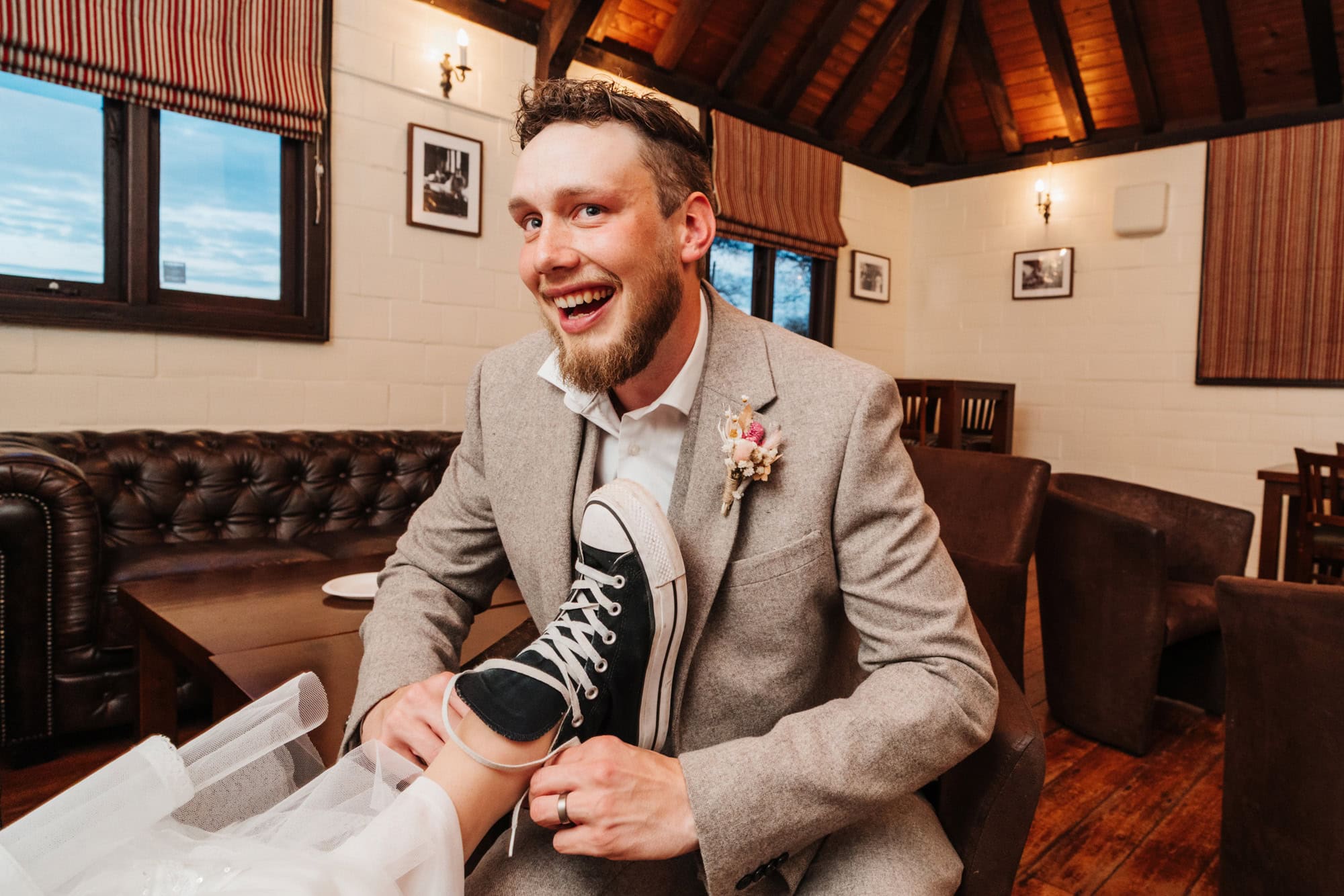
In fact, I’ve seen it select photographs from sequences that contain intentional blur or unconventional focus. That doesn’t mean it understands my artistic intentions, but it does demonstrate why it’s worth understanding what a particular piece of software actually does before dismissing it.
I’m still responsible for recognising which photographs matter. I wouldn’t claim that AI understands every emotional nuance, because it doesn’t, and I certainly wouldn’t blindly trust its selections either. But that’s precisely why I’m still involved.
AI can assist my judgement without replacing it.
And I think that’s an important distinction that’s sometimes missing from the conversation.
We’ve seen what happens when tools get misused
Think back to the early days of digital photography and Photoshop. Remember selective colour? Everything black and white except the bride’s bouquet. Or those incredibly dramatic HDR photographs where every cloud looked like the beginning of the apocalypse?
Some of the results were certainly memorable, although not always for the right reasons.
But nobody needed to conclude that digital photography itself was fundamentally wrong because somebody had gone overboard with Photoshop. The problem wasn’t necessarily the technology. It was how somebody had chosen to use it, and I think we need to apply some of the same reasoning to AI.
There are applications of artificial intelligence that genuinely concern me. I don’t want to create fictional moments and pass them off as photographs from somebody’s wedding, and I certainly don’t want to manufacture expressions, relationships or events that never happened. For me, that would undermine everything documentary wedding photography should represent.
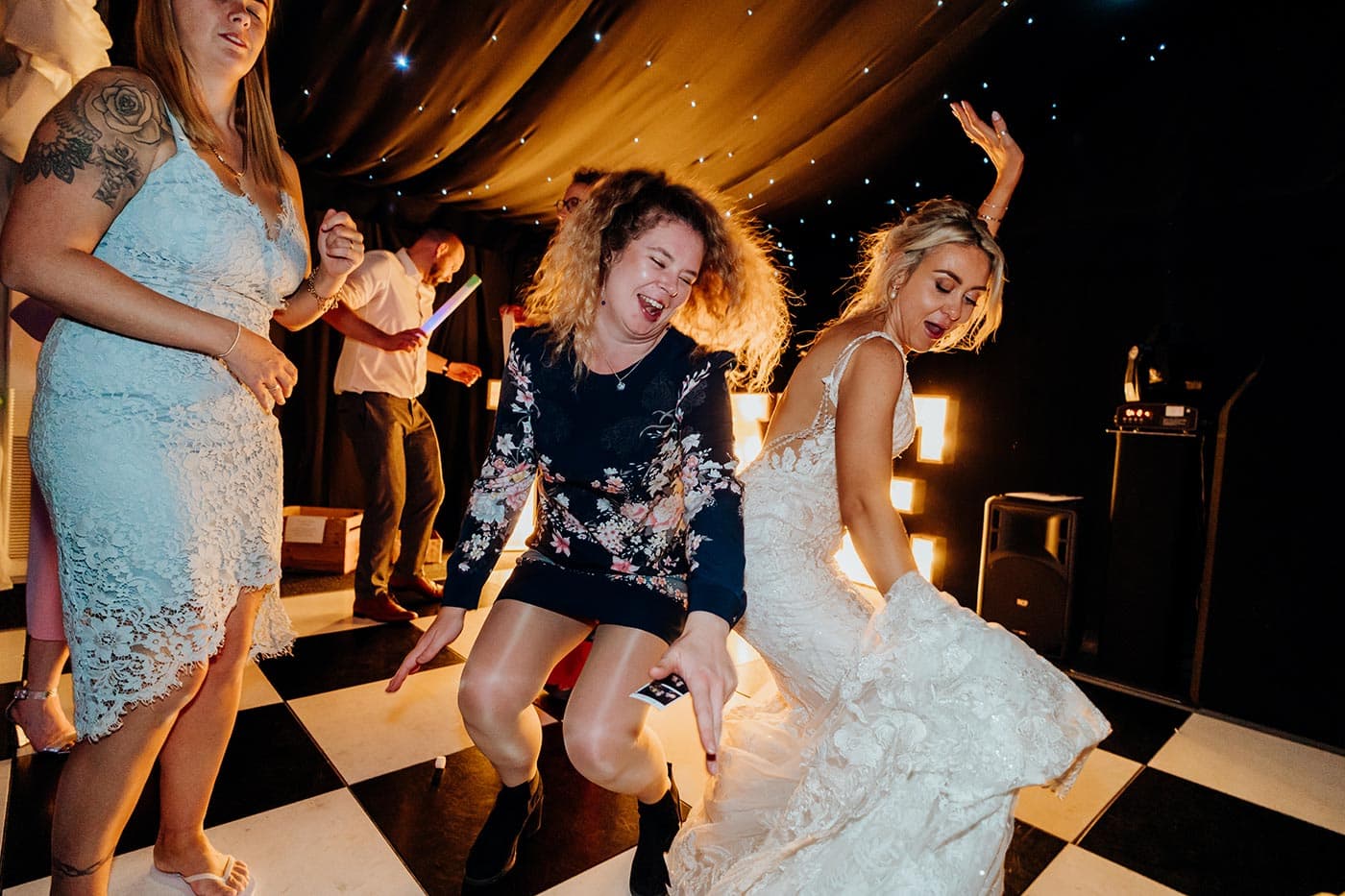
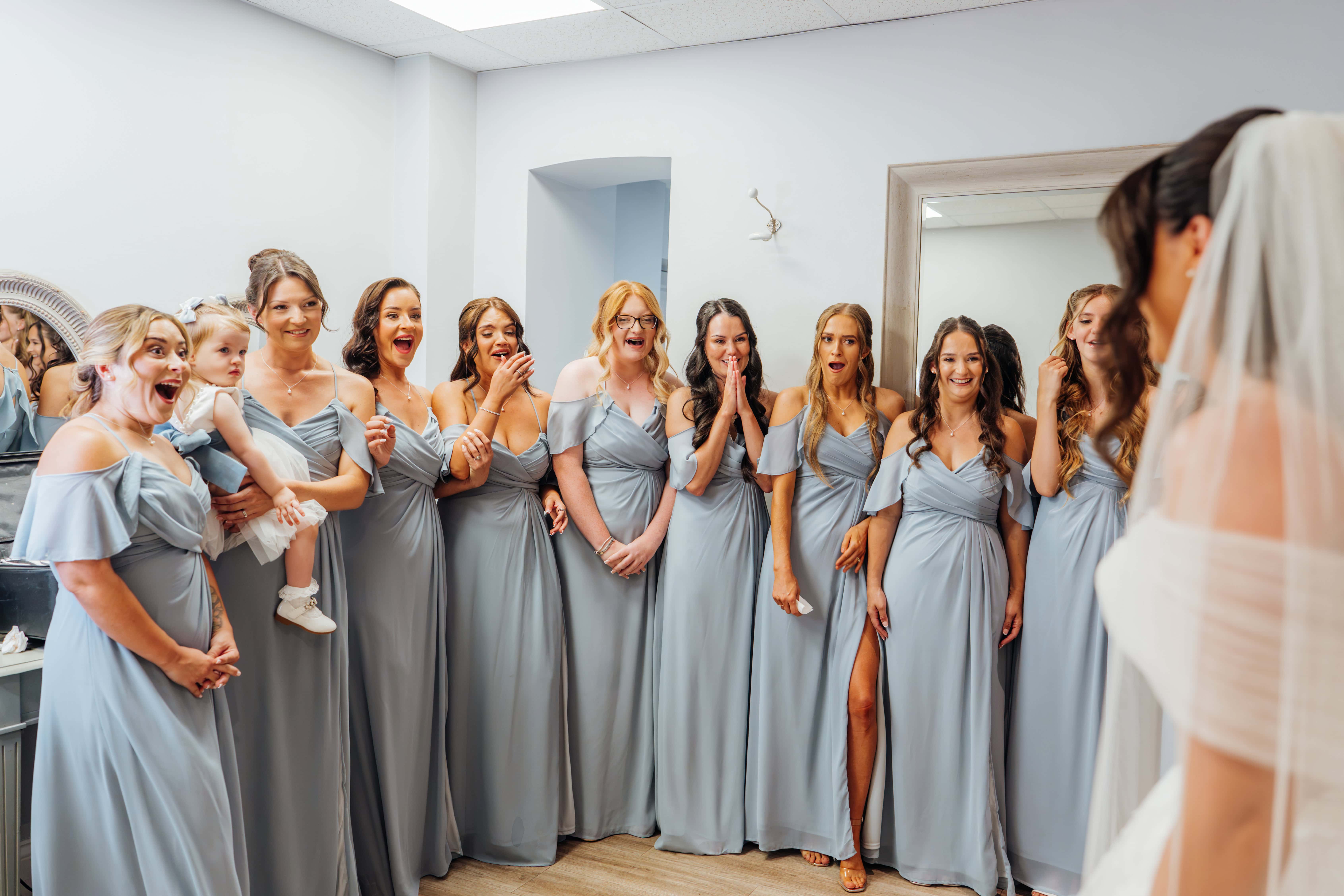
If somebody cried, laughed, hugged their grandmother or looked nervously across the room, I want that photograph to exist because the moment actually happened. That’s important to me. It’s the whole reason I photograph weddings the way I do.
But using AI to organise files, assist with editing, identify possible selections or help me develop software for my business? That’s an entirely different conversation.
I don’t think it’s helpful to lump all those things together under one heading and simply declare that AI is bad. There is an enormous difference between using technology to help process a genuine photograph and using it to create a fictional event that never took place.
Caution is different from fear
I’m not suggesting photographers should embrace every new technology. Far from it. There are legitimate questions surrounding AI, including copyright, privacy, authenticity and its potential effect on creative professions. Those conversations matter, and they shouldn’t be dismissed.
But I think there’s an important difference between questioning something because we understand its limitations and rejecting something simply because it’s unfamiliar.
I don’t adopt technology merely because it’s fashionable. I want to understand what it does, test it for myself and ultimately decide whether it helps me serve the people who trust me to photograph their weddings. If it doesn’t, I’m not interested.
But if something helps me work more efficiently without compromising the honesty or quality of my photography, I see no reason to reject it simply because it’s new. And equally, if another photographer prefers to do everything manually, that’s absolutely fine too.
Every photographer should be free to decide which tools suit them. What works for one person won’t necessarily work for another, and that’s rather the point.
Perhaps the problem isn’t technology
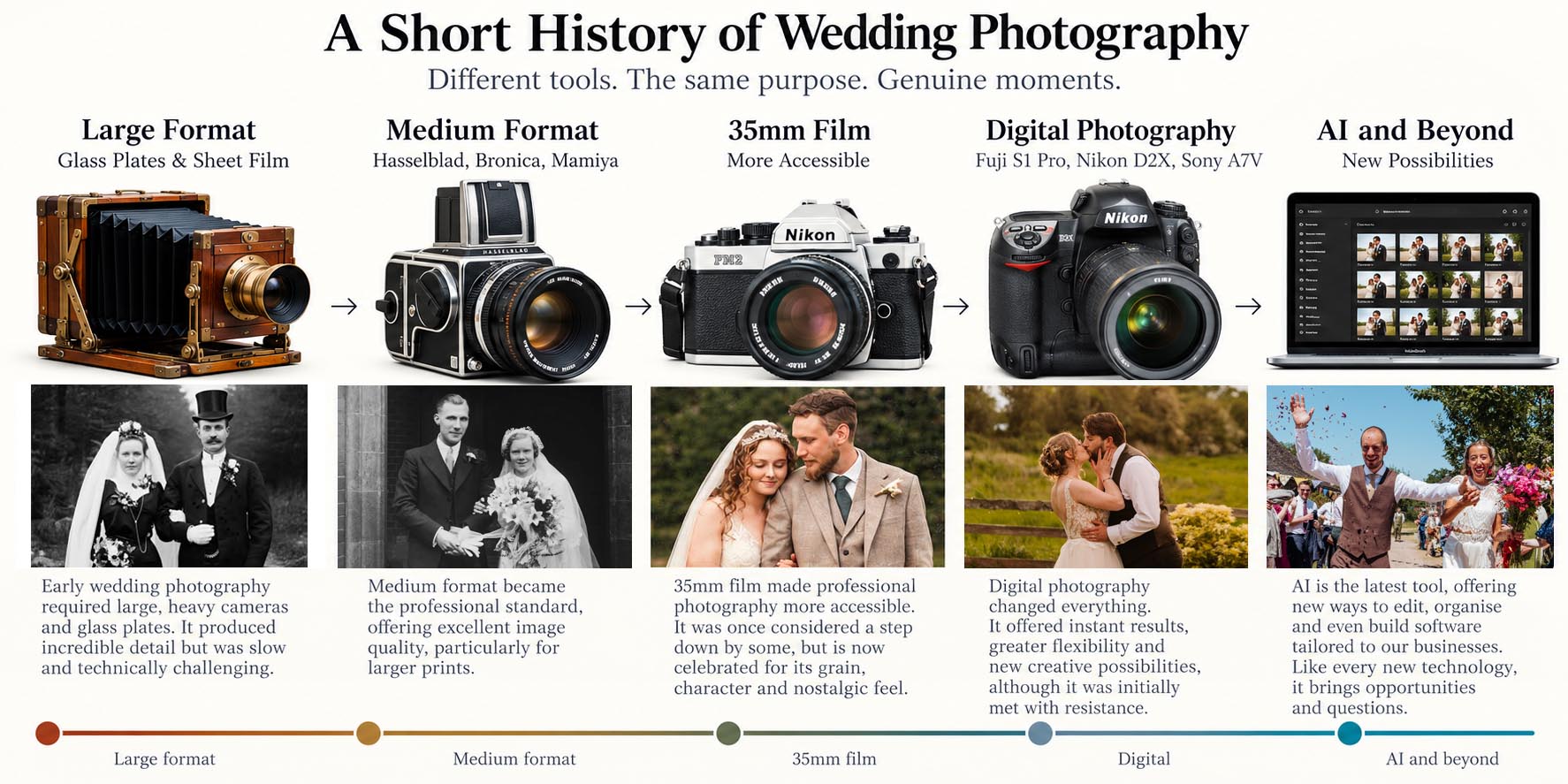
Looking back over my career, I find the pattern fascinating. Large format, medium format, 35mm film, digital photography and now artificial intelligence. Each generation has introduced new possibilities, and each has encountered people convinced that something important was being lost.
Sometimes those concerns were justified, and sometimes they weren’t. But photography continued to evolve, and things that were once dismissed eventually became accepted, sometimes even celebrated.
Perhaps twenty years from now we’ll look back at today’s arguments about AI in much the same way we now look back at the early arguments surrounding digital photography. Or perhaps some of today’s concerns will prove entirely justified. We won’t know unless we’re prepared to examine the technology properly rather than simply deciding whether we’re for it or against it.
For me, the most important thing hasn’t changed.
My couples don’t book me because of the camera I use, the number of megapixels it produces or the software running on my computer. They book me because they connect with my photographs, because they want genuine moments preserved and because they trust me to tell the story of their wedding honestly.
And that’s something I would never compromise.
Technology will continue to evolve, and our ideas about what’s considered normal will undoubtedly change with it. But the responsibility I have to the people who trust me with their memories remains exactly the same.
And perhaps that’s where the conversation about authenticity should begin.